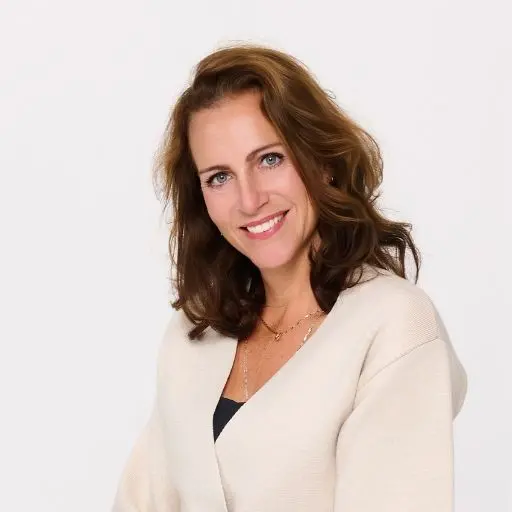
Who is Tim Ouborg?
Born and raised in Breda and now back in my hometown. Currently, I am a father of three children Bobbi, Goos, and Coco Ouborg and married to my great (childhood) love, Maxime Salomons.
Princess is a family business. Can you briefly tell us about its history and the size of your company and market?
In 2009, my father, Aad Ouborg, sold his company Princess Household Appliances. However, he kept the name Princess for us (his five children) so that we could start new businesses with it if we wanted to. In 2011, together with my sister, Florentine Ouborg, I founded Princess Traveller. Princess Traveller supplies a wide range of travel products to more than 20 countries. We offer high-quality travel products with a distinctive design. Since innovation has been part of our DNA from the very beginning, Princess Traveller is a brand that provides smart travel solutions for all types of globetrotters. We strive to promote and enable responsible travel by developing products made from sustainable and recycled materials. It doesn’t matter who you are or where you come from! As the name suggests, with Princess Traveller, you always #travellikearoyal!
What is Princess Traveller doing to reduce its plastic footprint, and since when?
About six years ago, we were one of the first brands in the world to introduce suitcases with shells made from recycled PET bottles. Our focus on sustainability has accelerated since the COVID-19 pandemic. Since then, we have explored how to further integrate sustainable materials within our company. Today, even the lining of our sustainable suitcases is made from recycled PET, and we no longer use single-use plastic or styrofoam in our packaging. Our I AM GREEN Atlantic suitcase features wheels, handles, and plastic trolley system parts made from recycled fishing nets and ropes from the maritime industry. Currently, there is no real end-of-life strategy for fishing nets and ropes in the maritime sector worldwide. Once they are old and worn out, they are often simply thrown back into the sea. Our partner, Waste Free Oceans, has initiated a new European strategy: the preventive collection of fishing nets and maritime ropes, with harbors and the fishing industry playing a crucial role. The collected nets and ropes are then recycled at a specialized recycling plant in Denmark. We receive recycled granules in black, dark blue, or dark green, which we use to manufacture various parts of our suitcases. By using recycled materials instead of new plastics, we actively contribute to significant CO₂ emission reductions.
Why do you think this is important?
Above all, to leave behind a cleaner world for my/our children (and hopefully future grandchildren). I am an optimist and convinced that we will overcome the climate crisis, but we need to take action. Of course, we cannot do this alone, so we hope to inspire other suitcase brands to think about sustainability and join us in our green dream.
What do you (and your team) enjoy most about sustainable entrepreneurship?
The energy it gives us every day, knowing that we can and want to make a difference. It provides a great drive for me, my sisters (Florentine, Nikki, and Lotte), our colleagues, and of course, the company. It feels good to have a shared mission! This also strengthens our team spirit. As a family business with a flat organizational structure, we have the flexibility and freedom to quickly make the right decisions toward sustainability.
What advice would you give to other entrepreneurs looking to become more sustainable?
What do you personally do to reduce your plastic footprint?
What is a practical sustainability tip you often share with people around you?
How do you view the future regarding this topic?
How do you feel about the current focus on CO₂ reduction versus attention on plastic footprint reduction and climate change?
That’s a tough one because focusing on one aspect is not always beneficial for the other. For certain products, such as suitcases, plastic is still the "best" material at the moment. That’s why we focus on longer product lifespan (quality and repairability), working with recycled and sustainable materials (moving from pre-consumer to post-consumer), local production at an affordable price (reducing transport and emissions), collecting and recycling suitcases of all brands together with our major clients/retailers, and eliminating single-use plastics in our packaging.
What is the biggest misconception about sustainability that you would like to dispel?
What should people really know about plastic pollution?
What are your sustainability goals for the next 5 to 10 years, particularly concerning your plastic footprint?
- 80% of our product range must be made from recycled and circular materials.
- A collection system must be established in the Netherlands/Belgium, where we take back suitcases of all brands and reuse them in our new products whenever possible.
- Develop a modular suitcase, made from as many mono-materials (recycled) as possible, ensuring easy recyclability.
- Establish a local production structure, so that we can manufacture (part of) our product range in the Netherlands/Belgium.
- Make it easy for consumers to repair their own suitcases and set up an affordable repair service in the Netherlands/Belgium.
- Ensure completely plastic-free packaging across our entire product range.


.png)

.jpg?version=19610&width=600)